
Issues revolving around tourism taking advantage of sea turtless
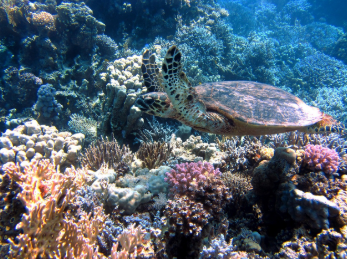
Mauritius welcomes more than 1,300,000 tourists every year, which actively participates in the island’s economy and creates many jobs locally.
However, this tourism can lead to the destruction of local ecosystems, for example with some excursions aimed at seeing and swimming with turtles, dolphins, whales or even sharks.
The problem ?
Trou aux Biches is a beach located in the northwest of the island, home to a coral reef rich in fauna and flora, including sea turtles such as the green turtle and the critically endangered hawksbill turtle. The proximity of these turtles to the beach has made it possible to develop boat trips to be able to see and swim with the turtles. However, these practices cause a disruption of the balance of the local ecosystem.
Towards a dependence of turtles on humans
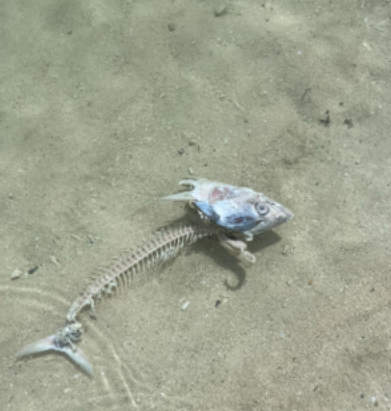
Turtles are attracted to fish heads that are thrown at them by boats to feed them.
The problem in itself is not to feed the turtles but to get them used to being fed every day, making them dependent on this food source, as they gradually lose the habit of going hunting for food.
Threat to turtle health
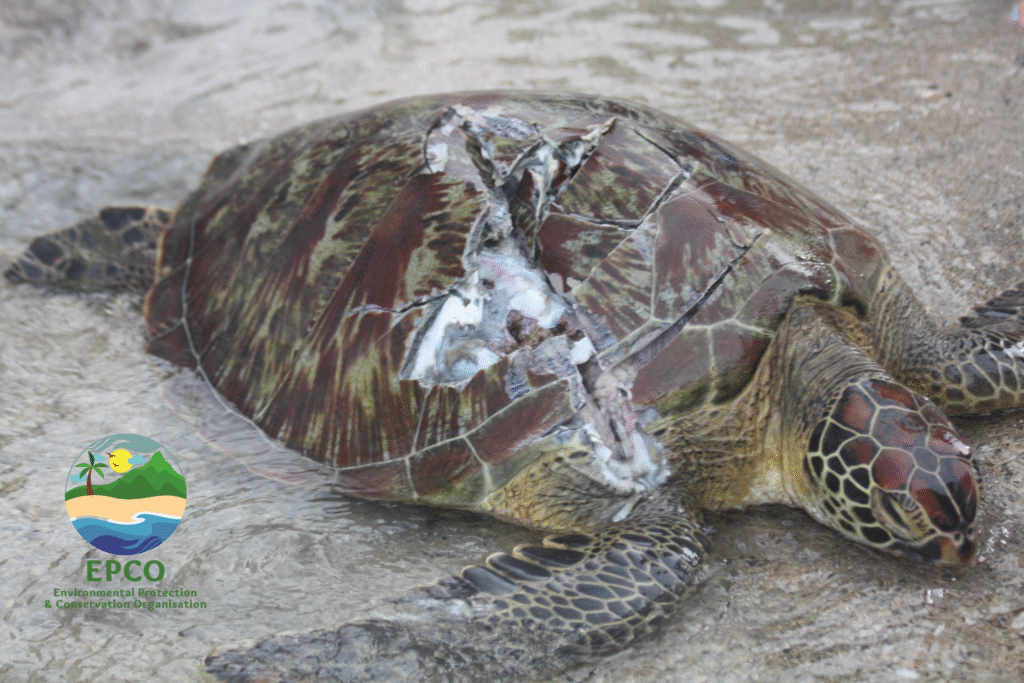
When sea turtles are approached too closely or too many humans are present in their habitat, they can be stressed, causing their behavior and reproduction to be altered. In addition, the hawksbill turtle present in the reef is critically endangered according to IUCN (category “CR”), so the disruption of the marine ecosystem by the over-presence of humans can worsen the situation of this endangered species. Moreover, beyond disturbing the turtles, the presence of many careless boats leads to fatal accidents for the turtles because of the encounter between them and the propeller of the boats.
Loss of authenticity
Overly scripted or commercial experiences can distort the relationship between man and nature. According to a 2020 study conducted by the University of Mauritius, 67% of tourists surveyed want to interact with turtles during their stay, but 81% say they are willing to change their behavior if they are better informed. Indeed, visitors want to see the turtles to feel connected to the marine environment of the island and not to create problems in the local fauna. These excursions are therefore not the best way for bonds to be created between humans and turtles.
Economic issues
Tourism around turtles generates significant income, but without strict regulations, it can become a short-term economy, destructive in the long term. The economic weight of tourism makes the regulations more difficult to enforce without harming local economic activity.
What does the law say?
First, the Fisheries and Marine Resources Act of 2007 prohibits any form of disturbance of the natural habitat of sea turtles. Then, a statement by the Ministry of Blue Economy, Marine Resources, Fisheries and Navigation on January 25, 2022 made it clear that it was forbidden for anyone to swim with, feed and harass sea turtles. The Fisheries Act of 2023 enshrined these bans, which were then recalled in a press release on October 18, 2024, supporting the fact that these actions can harm endangered species. In addition to these national bans, sea turtles are protected species globally. Indeed, Mauritius is a signatory to the Memorandum of Understanding on the Conservation and Management of Marine Turtles and their Habitats in the Indian Ocean and Southeast Asia (IOSEA). In the case of the observed outings, all of these rules are not respected.
No enforcement
Abuses are rarely sanctioned, due to the irregular application of the rules. This makes it difficult to control practices. Some companies operate without a permit or ignore the rules of distance to be respected with marine animals. In addition, as the law is fairly recent, and communication on this subject is weak, visitors may not be aware of these issues, hence the importance of raising awareness.
Towards more sustainable solutions
To be able to protect sea turtles, it seems necessary to turn to a more sustainable tourism that does not damage local ecosystems by respecting the turtles by meeting them punctually without forcing the encounter, not getting closer than 5 m, not feeding them. To do this, we will have to go through two things.
Firstly, to prevent these actions from happening, it is important to raise awareness of the threats posed by these excursions to the public as well as to skippers. Indeed, it is essential to inform tourists so that they are aware of the dangers that these outings cause to turtles because this awareness will create a decrease in the demand for these outings and therefore a decrease in these excursions. Local organisations such as EcoSud, the Mauritius Marine Conservation Society, and Reefs Mauritius are raising awareness among fishermen and tourism operators, and informing the public about sea turtles. In addition to this outreach component, organizations such as Forever Blue and the Marine Discovery Centre are monitoring populations through turtle identifications.
Secondly, if prohibited actions occur, it will be necessary for the law to be enforced, and accompanied by sanctions if prohibitions are not respected.
By Mathilde TENA, intern at EPCO